Showing posts with label Edna Chirico. Show all posts

Wednesday, January 15, 2014

Our 2014 goal - real-world experiences for students

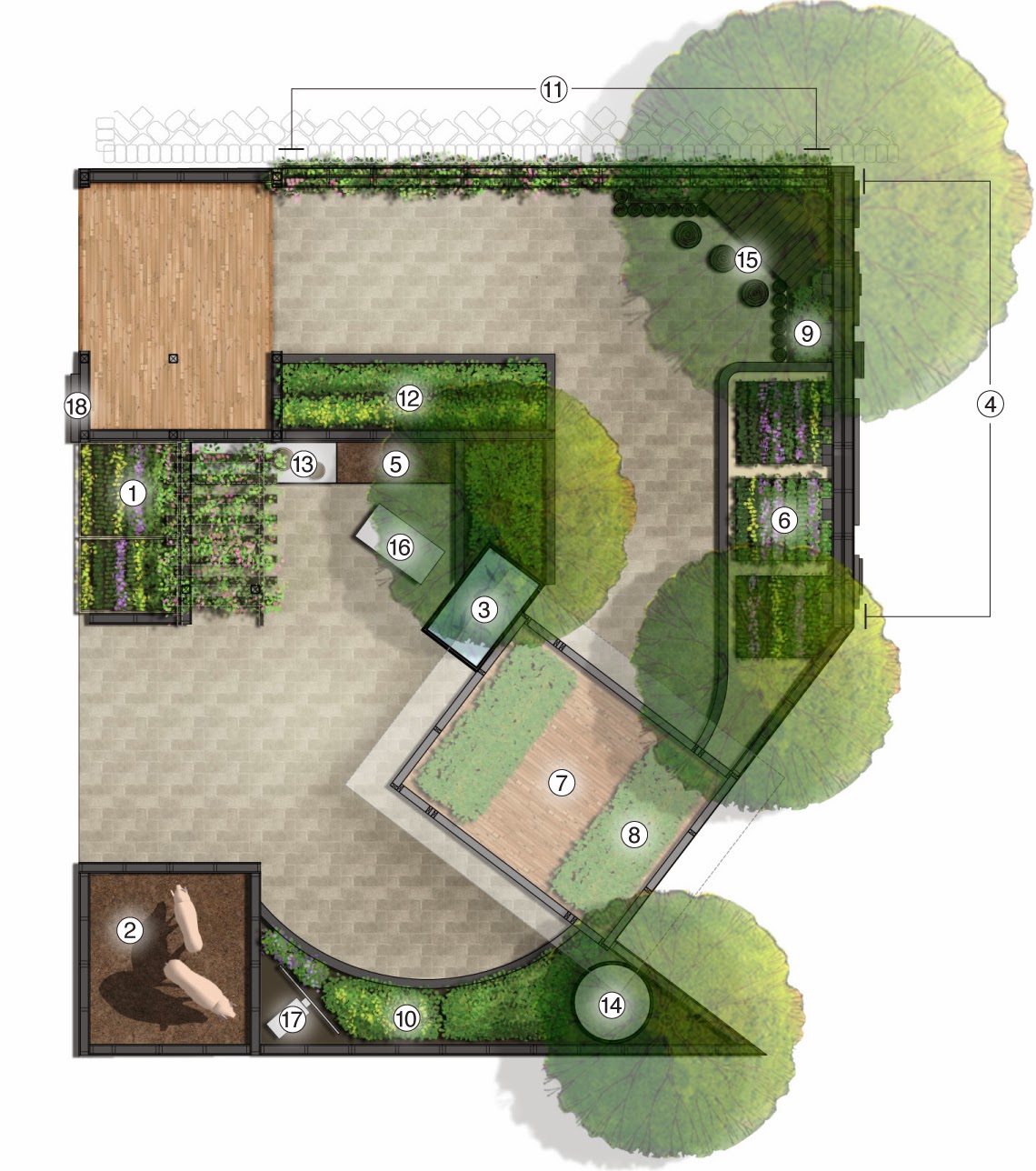
Ultimate Schoolyard Garden floorplan
The Catawba River District has just released our 2013 Annual Report and 2014 Plan of Work. Our journey has grown significantly since the inception of the Catawba River District and the vision to support education as the foundation for safe vibrant communities.

Look what a team can do

We have learned and grown.  This year you will see the culmination of a dynamic team of “educators” who have come together to bring our region the Ultimate Schoolyard Garden Display, a feature of the 2014 Southern Home and Garden Show.  But it is much more than that – it’s a collaborative connection of educators from the corporate world, the non-profit world and the governmental-agency world embracing STEM skills, schoolyard gardens, food eco-systems, career awareness, and life skills – all focused on helping our students reach self-sufficiency.  What does that mean and why are we doing it? Much like we are learning that mass-produced fast food is not the healthiest way of eating, mass produced students lack a connection to their “real world”.  So let’s use the real world they live in every school day to make those connections.

Bringing real-world learning to our students

The Ultimate Schoolyard Garden and the Green Teacher Network establish the platform for “real world” experiences at school.  Come to the Spring Show and see how schoolyard gardens relate to every subject matter, every age, while providing a platform for hands-on, exploratory learning.  They not only connect to food and plants but energy, buildings, air quality, and health. Whether you aspire to build that window box or take on a full aquaponics (fish farming & hydroponics in a closed loop water system) project, you will find ideas within the Ultimate Schoolyard Garden.
The Green Teacher Network which is a regional collaboration of educators focused on schoolyard gardens has grown from 40 to over 400 in the past 6 months. We expect the doubling to continue exponentially as the quarterly workshops continue.  We are all educators and all have an opportunity to support each child making that connection to the real world.

We need your help and support

Please share our newsletter with your contacts, Friend us on Facebook and support us financially if you are able.  I’d like to leave you with one of my newest favorite quotes from one of our world renowned Charlotte Gardeners, Elizabeth Lawrence (see www.winghavengardens.org).  Elizabeth Lawrence wrote the Charlotte Observer garden column for many years.  In her first column in 1957, repeated in her book A Southern Garden, she wrote “the world of gardening is a world as old as the history of man, and as new as the latest contribution of science: a world of mystery, adventure, and romance; a world of poetry and philosophy; a world of beauty: and a world of work…no other undertaking will give as great a return for the amount of effort put into it”.
Join us and get your hands dirty
Edna Chirico, Executive Director

Friday, December 6, 2013

It takes teamwork to grow an Ultimate Schoolyard Garden

CPCC students and teachers assemble the Ultimate Schoolyard display
About the time last summer that Charlotte gardeners were harvesting tomatoes, two-dozen people planted the first seeds for a garden that will bloom next February at the Southern Spring Home and Garden Show.
People who have dedicated their lives to gardening, education, health, nutrition and children decided to put a giant tomato stake in the ground and launch what they boldly called the Ultimate Schoolyard Garden.
Four months later, after much planning, the 30-by-30 display of inspiring garden possibilities is taking shape at local greenhouses and inside the woodworking shop at CPCC’s Harris Campus.
It takes a team to grow the Ultimate Schoolyard Garden. Our team has great talent and dedication.
Designers: First off are the display’s designers. Visitors will be amazed by the display dreamed up by Beth Poovey and her team from LandDesign.

Builders

Three weeks ago, carpentry teachers and students at CPCC began using that design to assemble more than 80 4-by-4-foot recycled oak pallets into garden walls, planters and even the representation of an old school bell tower. Fittingly, our project is letting CPCC carpentry students apply their classroom lessons to a real-life project. These classes are also constructing a  greenhouse. We must recognize instructors Tony Hayes and Tom Dermitt for their enthusiastic support.

Growers

Two amazing horticulture experts, Annie West and Kaiti O’Donnell, have taken on the challenge of identifying the nearly 2,000 plants that will populate the pallet walls, raised-bed garden boxes and other components of this display.  They are striving to include as many native plants as possible, while ensuring the plants are show-ready in late February. Remember, this show is in the dead of winter when all plants simply want to lay dormant and await spring.

Experts in worms, fish, ozone …

Simultaneously, teams are working on the aquaponics (Sam Fleming), coordinating animal visitors (Catherine Crocker), overseeing an ozone garden (Mary Stauble) and weather station (Terri Bennett), designing a certified wildlife habitat (Mary Bures), helping with a reading nook (Michell Houck), and dealing with compost including worms (Henry Owens) – to name a few of this project’s many facets.

Our students

Next month you will hear more about student involvement through garden art, the communications strategy surrounding this display and how the Green Teacher Network has formed to hold quarterly workshops supporting the growing demand for schoolyard gardens at our schools, and the growing demand for an increased understanding of where our food comes from.

And you!

Please consider supporting this effort through a donation and sharing our newsletter with your friends. 
Contact me for details on how you can provide financial support. Or CLICK HERE to donate online. This is a totally non-profit effort, so every gift large or small will help. 

Thanks,

Edna Chirico, Executive Director, Catawba River District

Friday, October 25, 2013

Meet Megan Lambert: Culinary expert with a heart for kids

Megan prepares salad dressing at the NC STEMing the Gap conference
By Edna Chirico
I’d like you to meet Megan Lambert, a senior instructor in the College of Culinary Arts at Johnson & Wales University. She also is a nentrepreneur (you can find her jams at places like Atherton Mill and online at GARNETGALS.COM) and an author. She recently released the paperback, “The Organic Gardener’s Cookbook: Easy Growing Tips and Delicious Recipes for Your Home-Grown Vegetables,” which she co-authored with gardening expert Don Rosenberg.
I met Megan a year ago at one of the first meetings of the Mecklenburg County Food Policy Council. Since then I have had the privilege of joining Megan’s Johnson and Wales students for two of their special instructional training lunches, which were amazing.
Megan has joined the River District’s Ultimate Schoolyard Garden team and is passionate about introducing our youth to the local food eco-system through incorporating her culinary skills into our schoolyard gardening collaboration.
In the last few months Megan, Henry Owens (whom you will hear about in a blog in the near future), Rich Haag and I have begun working on another book, “Ultimate Schoolyard Garden Guide for Educators – North Carolina Piedmont Edition." I will have more to share about our book project in a month.
Last month Megan joined Dr. Cynthia Klemmer (via video) and me in a presentation in Raleigh at the NC STEMing the GAP conference.  The photo you see included here is of Megan sharing samples of her “Parts of a Plant” salad and fresh salad dressing that she whipped up four our audience in just under 2 minutes.
Megan is one of those wonderful people who uses her talents to make our community a better place.

Wednesday, September 11, 2013

Meet the great team creating Ultimate Schoolyard Garden, Entrepreneurial Village

Ultimate Schoolyard Garden plan
To make the vision of the Ultimate Schoolyard Garden and Entrepreneurial Village a reality – it essentially takes a village of volunteers. The team assembled by the Catawba River District has already been meeting since March to develop the design and components of this project for the 2014 Southern Spring Home & Garden Show. These are dedicated professionals who are finding time in their schedules to give back to their community – and we are grateful.

These two projects will debut in Feb. 21 at the Southern Spring Home & Garden Show.

  • The Ultimate Schoolyard Garden will pack dozens of doable ideas into a 30-by-30-foot display, including international gardens, rain gardens, aquaculture, hydroponics and garden walls. 
  • The Entrepreneurial Village will give students at dozens of schools a way to market garden-related products, with proceeds going to support their school gardens. 


If a consultant were hired to design and implement this project, it would easily exceed a cost of $500,000. We are doing it on a fraction of that budget.

Join the team by becoming a sponsor

Our development manager, Terri DeBoo, is hard at work securing corporate sponsors.  Please recommend this project to your business network. And please contact me to learn more about how your group or company can support this great project. Send an email or call me at 704-562-8847.
– Edna Chirico, River District Executive Director

Ultimate Schoolyard Garden & Entrepreneurial Village Team


Project Management & Coordination


  • Edna Chirico, Catawba River District 
  • Rich Haag, Catawba River District, Communications
  • Wanda Jean Campbell, Former Gaston County Business Partnership Director – Teacher/Entrepreneurial Village coordinator for Gaston County
  • Shelly Lands, Entrepreneurial Village Accounting/Sales
  • Terri DeBoo, Development & Sponsorships


Executive Board support


  • Kathi Robinson, Novant Health/Catawba River Dist. Board 
  • Ann Danzi, former Mountain Island Lake Marine Commissioner
  • Beth Mack, Nutritionist


Structures team


  • Beth Poovey, LandDesign – Garden Designer 
  • Tony Hayes, CPCC Harper Campus
  • Bert Lynn, Stewart Engineering


Horticulture team


  • Dr. Cynthia Klemmer
  • Annie West, CPCC Cato Campus
  • Kaitie ODonnell, Living Color


School system liaisons


  • Wayne Fisher, CMS STEM Team 
  • Tammy Mims, Gaston County STEM Team 
  • Valarie Yadko, Gaston County Business Partnerships


Mecklenburg Health Department


  • Allison Nelson


Partners


  • Allison Marshall, Gaston Cooperative Extension
  • Kendall Kendrick, Mecklenburg Food Policy Council 
  • Henry Owens, Friendship Gardens 
  • Megan Lambert, Johnson and Wales
  • Cynthia Marshall, Communities in Schools
  • Mary Bures, NC Wildlife and Great Outdoor University
  • June Blotnick , Clean Air Carolina 
  • Ron Morgan & Sam Fleming, 100Gardens 
  • Catherine Crocker,  Mecklenburg Coop. Extension/ 
  • Jeffie Hardin, Rivendell Farms – Sustainable Working Farm & Whitewater Academy Garden Coordinator

Friday, August 23, 2013

Know Your Farms Tour helps us support our local growers

30 area farms welcome you 1-6 pm Sept. 14-15
Last year I had the opportunity to visit several farms on the Charlotte area Know Your Farms Tour. The KYFT returns Sept. 14-15 and offers you the chance to visit up to 30 farms that sell fresh, healthy produce in Charlotte.

You might first think each of these farms is the same.  What a surprise I experienced.  We toured a grass-fed beef farm in Cabarrus County, a cheese making farm, an organic vegetable and herb farm, the Lomax Farm Incubator and we even toured a budding vineyard.

It is exciting to be part of the resurgence of local farming in this region.  If we as consumers continue to analyze our food system and ask questions, we will be encouraged to support these local farmers and entrepreneurs.

Taking it one step further is the Catawba River District and its efforts to partner in the evolution to incorporate schoolyard gardens into the local farm and health and wellness goals of our region. All too often, we get caught up in the complicated technical and often expensive aspects of education and forget the opportunity to be successful through folding the readily available aspects of our daily lives and community into the education process.

The food eco system is such an opportunity.  The math of a garden, the science of cooking, the cultural aspects of what we grow, the history of what has been cultivated over the centuries are all amazing opportunities for learning.

Please consider touring the area farms September 14 and 15 and supporting the Catawba River District at catawbariverdistrict.org.

– Edna Chirico

Tour details


Know Your Farms runs Charlotte's most convenient local food delivery service with produce, eggs, meats, and dairy from local farms. Their mission is to help rebuild a sustainable local food system in the Charlotte region. The Charlotte Area Know Your Farms Tour is self-guided, with farms located  in clusters all around the  Charlotte region for easy  touring.

Get Ready!
The tour runs 1-6 p.m. Sept. 14-15.  Vehicle passes are $30 per vehicle, or $25 when you buy in advance, so fill your car with friends and family!  Passes are available online and at various locations. Visit knowyourfarmstour.com for event details, downloadable maps and advance tickets.

Get Set!
You will only be able to visit 3-4 farms per day. Allow 1-2 hours per farm, depending on travel time.
Farms have been clustered together to help you make the most of your day. Read the farm descriptions; think about picking a farm that appeals to you and planning stops nearby.
GPS can be inaccurate in rural areas. We have included directions here and placed signs at each farm and key intersections to help you find your way. To get more detailed directions, use our Google Map at knowyourfarmstour.com/route

Go!
Almost every farm will have products for sale, so be sure to pack a cooler with ice and bring the checkbook. Many farms have kid-friendly activities, so don’t hesitate to bring the little ones (but leave your four-legged children at home)!

Thursday, August 8, 2013

Vacation travel highlights sustainability efforts elsewhere

Portland compost-recycle bins
I vacationed in Oregon and Washington this summer and was amazed by the efforts made toward sustainability.  In downtown Portland as I stepped off the light rail, I found recycling and composting bins.

The most amazing story was Lopez Island. It is a small island with a modest fishing village about about 1 ½ hours northwest of Seattle.  The 2,300 people who live here have a median household income of $46,000 – roughly the same as here.

In the very center of this island is Lopez Island School (www.lopezislandschool.org), which has integrated schoolyard gardens and local foods into its curriculum, cafeteria and lifestyle.

Raised vegetable beds at Lopez Island School
This is known as the K-12 LIFE (Lopez Island Farm Education) Garden and Farm Program and consists of the following components:
Portable kitchen

  • A garden coordinator who coordinates the 1 hour per week of time each student spends either in the garden or with the portable kitchen (elementary)
  •  In the garden you will find raised beds, tunnel hoop houses (mini-greenhouses) to extend the growing season, pumpkin patches, fruit trees, herb gardens.
  • In the classrooms are grow lights for plant starts and an area for cleaning seeds.
  • At the elementary level, students use a portable kitchen and can be found making humus, cooking stir fry or making kale chips.
  • They have a location to mill wheat on site, which they use to make bread and tortillas.
  • S&S Homestead Farm is a high school elective. Students conduct research and learn biodynamic instruction, canning, cheese-making, sausage making and milking.
  • The high school culinary class uses garden produce in their cooking.
  • On site composting.

High-achieving students

Lopez Middle/High School was awarded a Silver medal for Best High Schools in the 2013 US News and World Report ranking of the nation’s best public high schools. Lopez School ranked #21 of 584 schools in Washington State and in the top 1,000 nationally. Lopez improved from their 2012 rank of Bronze.


         Student/Teacher Ratio                   Algebra                  English

#21
86 SCHOOL RD
LOPEZ ISLAND, WA 98261
http://static.usnews.com/images/high-schools/levelmeter-notches.png
Smaller than WA Avg
129 Students
10 Teachers
http://static.usnews.com/images/high-schools/levelmeter-notches.png
Above WA Avg
90% Proficient
10% Not Proficient 
http://static.usnews.com/images/high-schools/levelmeter-notches.png
Near WA Avg
86% Proficient
14% Not Proficient 

                                   
In North Carolina, Butler High School in Matthews was rated 3rd in the state.  The demographics at Butler High School are significantly higher than Lopez Island, median income is $72,000 compared to Lopez Island at $46,000.

Student/Teacher Ratio             Algebra               English

1810 MATTHEWSMINT HILL ROA
MATTHEWS, NC 28105
http://static.usnews.com/images/high-schools/levelmeter-notches.png
Larger than NC Avg
2,171 Students
115 Teachers
http://static.usnews.com/images/high-schools/levelmeter-notches.png
Above NC Avg
80% Proficient
20% Not Proficient 
http://static.usnews.com/images/high-schools/levelmeter-notches.png
Above NC Avg
85% Proficient
15% Not Proficient 


Source:  US News and World Report

Tuesday, July 3, 2012

River District Leaders Honored as CMS STEM All-Stars

Students learn about the power of filtration at Outdoor Learning Fair. Photo by Rich Haag
Dr. Cindy Moss, Alisa Wickliff and Edna Chirico recognized for K-20 STEM Outdoor Learning Fair
Edna Chirico, our executive director, and two of our K-20 Learning World Team, Alisa Wickliff and Dr. Cindy Moss, have received Charlotte-Mecklenburg Schools STEM (Science Technology Engineering & Math) All-Star Awards for their work with students in the Catawba River District.
The awards, presented June 7 at Discovery Place, recognize teachers, administrators, staff and community partners who have made significant contributions to help students grow and learn by participating in science, math, engineering and technology programs and activities.

Chirico, Moss and Wickliff were instrumental in creating the inaugural K-20 STEM Outdoor Learning Fair last fall at the U.S. National Whitewater Center for more than 300 elementary-school students.

Wickliff is assistant director of the UNC Charlotte STEM Center. Moss recently retired from her position as Charlotte-Mecklenburg Schools STEM director to join Discovery Education. She now is director of global STEM initiatives, responsible for designing, developing and implementing comprehensive STEM initiatives worldwide. At the June 7 event, Moss also received the 2012 Michael C. Jackson Distinguished Service Award, given by the NC Science Leadership Association in recognition of her great service to science education.

STEM education includes programs focused on building science, technology, engineering, and math knowledge and skills. STEM is important because many employers worldwide seek workers with knowledge in these subjects, and this trend is expected to continue.

Chirico and Wickliff will be leading the Catawba River District’s second K-20 STEM Outdoor Learning Fair on Sept. 28 at the Duke Energy Explorium. The K-20 STEM Outdoor Learning Fair serves 5th graders from the River District’s participating schools including Gaston County’s Catawba Heights Elementary and Ira Rankin Elementary and CMS schools Mountain Island Elementary, River Oaks Academy and Whitewater Academy.

About The Catawba River District

The River District is a regional organization committed to sustainable community and economic development for a 16,000-acre area including portions of Mount Holly, Belmont and northwest Charlotte and Mecklenburg County. Since the River District’s founding in 2008, numerous community and education partners have responded to district’s vision and the opportunity to transform this area into a model for “green” community and economic development, education and regional cooperation.   

The River District is a vital part of the Charlotte region’s watershed and includes the US National Whitewater Center, the North Carolina Educational Forest, and parts of the Carolina Thread Trail.  

About Rich Haag –  Rich gained his love for the outdoors while roaming the woods and river gorge near his upstate NY home. He has spent many vacations – one lasting eight weeks -  camping with his wife, Karen, and their sons. Rich still roams the woods nearly every day, either walking with Karen at Reedy Creek Nature Preserve or cycling on the Mallard Creek Greenway.

Sunday, April 15, 2012

Birthdays in Dog Years

I'm 8, and I bet you can't spot a hint of grey! (Only my groomer knows for sure!)
Sage Canine Advice, by Sage Riverdog – April 15, 2012
You probably know dogs age faster than people. I just had a birthday the beginning of this month. My sister Pepper and I turned 8 years old. That’s the equivalent of us being in our 50s. We are showing some grey, but our energy level is just great because we get regular exercise and other adjustments that make our aging easier. 
Small dogs don’t age as fast as larger dogs, and pure breeds tend to age faster than mixed breeds or “pound puppies”. 
That's me, left, with my sister, Pepper.
As your dog ages you may want to follow some of these recommendations:
  1. Be sure and maintain regular exercise. Walking, hiking, swimming are great. Just keep an eye on your dog. If it is panting or looking tired, it’s time for a break. Older dogs can’t regulate their heat as well as younger ones. Since dogs only cool off through the pads of their feet and by panting, they can get overheated. Make sure there is always plenty of fresh water available. If you hike, be sure to pack a bowl and water for us.
  2. To cope with the reduced heat regulation, having a pet bed is a good idea. As dogs age they get the same aches, pains and stiffness as older people. Giving a muscle message to your dog helps ease the discomfort.
  3. As dogs get older they can also experience symptoms of diminished eyesight, smell and hearing. In addition, there is a form of dog Alzheimer's. Just keep an eye on your dog’s behavior and if it changes, check in with your vet.
  4. As joints get stiffer, humans  will need to make adjustments and potentially provide assistance in climbing stairs and getting into a car. Doggie stairs are a good idea. I don’t need anything like this yet, but my cousin, Black Cat, who lives in Nashville, has stairs to get up on beds since he’s quite overweight.
  5. Maintaining a healthy weight and adjusting dog food to a senior brand is really good for digestion and joints. My sister lost nearly 10 pounds last year, and she’s moving so much better now.
  6. I get my teeth brushed a few times a week. It took a while, but I have gotten used to having the doggie toothbrush put in my mouth. I really like the beef-flavored dog toothpaste! My vet said a damp washcloth rubbed over the teeth can also help in keeping tartar off my teeth and help my breath smell better. Plus healthy teeth keep me healthier, too.
I plan on turning grey gracefully and enjoying the second half of my life to its fullest. 8 is the new 5 as far as I’m concerned. Happy hiking!


About Sage – Sage is an 8-year-old black Labrador retriever who lives with River District Executive Director Edna Chirico and Edna’s husband, John Huber. Sage earned a Canine Good Citizen award, which allows her to visit nursing homes, hospitals and schools. Sage loves to run, fetch, swim, ride in boats, travel in the car and play with just about anyone, especially children. 
 

Sunday, April 1, 2012

The Dog Nose


Sage Canine Advice, by Sage Riverdog – April 1, 2012
Guess which nose is mine?
 

In this height of allergy season,  I figured it would be a good time to talk about my nose and the noses of all dogs.  My nose can be wet or dry.  A dry nose doesn’t mean I’m sick, unless there’s yucky stuff coming out of it, too.  
My nose has two primary uses: to keep me cool and to help me smell.  I can only sweat through my paws, so I pant to help keep me cool.  I also drink lots of water.
I sneeze a lot – not as much as some dogs who sneeze when they get excited.  I sneeze to clear my nose, and if I smell something I don’t like.  Although I never have,  I can get a cold and respiratory infection and if that were to happen I’d need to go to the vet.
It’s important that my nose be taken care of. I have a black nose and it can get sunburned. Dogs with lighter-colored noses can get sunburned pretty easy. It’s a good idea to keep lighter-colored dogs out of the sun or to put sunscreen on their noses, but they will most likely lick it off.
I use a metal bowl for my food and water. I have a canvas bowl for when I go hiking. It’s a good idea for all dogs to use metal or glass or ceramic bowls. Plastic isn’t a good idea since plastic can cause contact sensitivity in dogs and actually cause the nose to change color. 
Just like people, dogs can be allergic to pollens, foods, drugs, mites, spores, and chemicals. They can even be allergic to human dander (our shed skin). A dog's allergy symptoms don't stop at a runny nose; they can also include sneezing, coughing, itchiness, nose bleeds.
Fortunately I don’t have allergies and can enjoy spring to its fullest. I'm heading out to do some rolling right now –  Oh yeah!


About Sage – Sage is an 8-year-old black Labrador retriever who lives with River District Executive Director Edna Chirico and Edna’s husband, John Huber. Sage earned a Canine Good Citizen award, which allows her to visit nursing homes, hospitals and schools. Sage loves to run, fetch, swim, ride in boats, travel in the car and play with just about anyone, especially children. 
 

Sunday, March 18, 2012

Backyard Nemeses

Sage Canine Advice, by Sage Riverdog – March 18, 2012
I am fortunate to have a very nice backyard with lots of shade trees.  I take my responsibility of protecting my backyard very seriously.  I have always been a squirrel chaser – my owners don’t like them in the birdfeeders.  A couple years ago we had a huge squirrel, I think my owners called it a raccoon, in our birdfeeders – it took some time to run off.   This year there have been some really strange new visitors.  A couple times my sister and I have chased off what looks like a dog, but it acts more like a cat in the way it runs. They called it a coyote and said it hunts mostly at night, but is sometimes seen in the early morning or early evening.  I saw it early evening – twice.  The nerve! Running right through my yard uninvited.   
We also had a couple of huge birds. My sister watches birds, I’m really not interested.  Pepper also barks at the squirrels jumping from tree to tree – a lot of good that does. 
These big birds caught my attention. They seemed to scare all our birdfeeder birds away.  I was told they were Cooper’s Hawks looking for a place to nest. 
 Just this week we found a huge mouse that we chased up in a tree.  We’ve seen a lot of little mice – our cat brings them home from time to time – but this thing was huge and had beady eyes.  
 Our owners calmed us down from barking and took pictures of this thing they called a possum.  I overheard them saying it might have been after the compost.
You just never know what you might have to deal with in your own backyard.  Keep your eyes and ears open and please throw my stick.  


About Sage – Sage is an 8-year-old black Labrador retriever who lives with River District Executive Director Edna Chirico and Edna’s husband, John Huber. Sage earned a Canine Good Citizen award, which allows her to visit nursing homes, hospitals and schools. Sage loves to run, fetch, swim, ride in boats, travel in the car and play with just about anyone, especially children.